

Ai crypto trading bots budget
Buying a crypto trading bot is less about finding the cheapest option and more about matching the tool to your capital size. A $5 monthly subscription makes sense for a $1,000 account, but it drains your profits if you are running a $10,000 portfolio. Conversely, enterprise-grade platforms with advanced API limits and dedicated support often cost hundreds per month, which is overkill for beginners testing basic arbitrage or grid strategies.
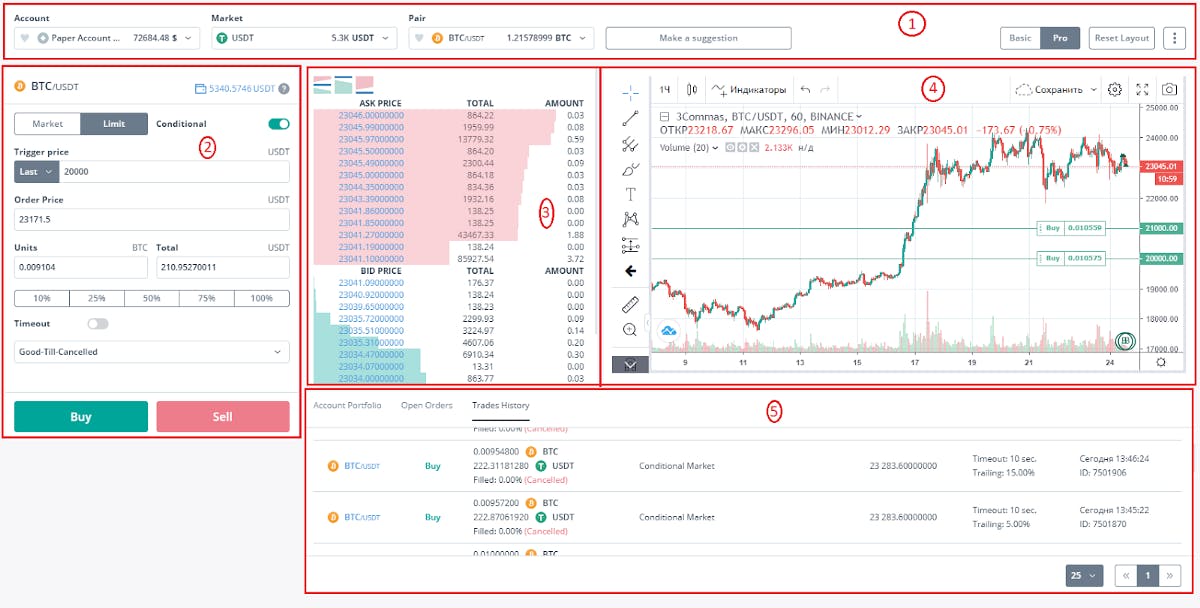
Most reputable bots like 3Commas, Cryptohopper, and Pionex operate on a freemium model. These free tiers usually limit the number of active exchanges or concurrent strategies. For example, 3Commas allows two free DCA bots, while Pionex includes ten built-in trading bots with zero subscription fees, charging only a small trading fee on top of exchange costs. This structure lets you validate your strategy without upfront risk.
If you need more power, paid tiers unlock features like advanced signal markets, backtesting on historical data, and multi-exchange management. Coinrule, for instance, offers a free plan with limited rule sets, but upgrading to Pro or Premium removes those caps and adds priority support. Always calculate the break-even point: your bot must generate enough profit to cover the subscription fee plus any trading fees it incurs.


As an Amazon Associate, we may earn from qualifying purchases.
Shortlist real options
Comparing AI crypto trading bots requires looking beyond marketing claims to see how each platform actually handles execution and risk. The leading tools in 2026 generally fall into two camps: dedicated bot software that connects to your existing exchange via API, and exchange-native bots that run directly on the trading platform.
Dedicated platforms like 3Commas, Cryptohopper, and Coinrule offer advanced features such as AI signal integration, strategy marketplaces, and multi-exchange management. Exchange-native options like Binance Trading Bots or Pionex provide lower barriers to entry with built-in liquidity and simpler interfaces. The right choice depends on whether you prioritize customization and cross-exchange control or ease of use and integrated fees.
The table below compares the five most prominent AI crypto trading bots for 2026 based on their core capabilities, supported exchanges, and pricing models.
For traders who already use major exchanges, starting with the exchange's native bot can be the most efficient path. Platforms like Binance offer AI-driven trading copilots that suggest strategies based on market sentiment, while Pionex provides a wide array of pre-built bots with zero additional subscription fees, only standard trading commissions.
If you trade across multiple platforms or need advanced risk management tools, dedicated software like 3Commas or Cryptohopper provides the necessary infrastructure. These tools often include backtesting engines and AI signal integrations that allow you to automate strategies derived from technical indicators or social sentiment data. However, they require API key setup and carry subscription costs that can eat into margins for smaller portfolios. Before deploying any bot, remember that crypto bots can be profitable, but they are not profitable by default. Results depend heavily on your strategy choice, market conditions, parameter setup, and risk control. Always test with small amounts or paper trading before committing significant capital to automated strategies.
Inspect the expensive parts
AI trading bots promise automation, but they don't replace the need for diligence. A misconfigured bot can drain your portfolio in minutes, especially during high-volatility events like flash crashes or liquidity droughts. Before committing real capital, treat your bot setup like a hardware inspection: check the critical failure points first.
Verify API permissions
The single most common cause of catastrophic loss is granting your bot "Withdraw" permissions on your exchange API keys. Never do this. Your bot only needs "Trade" and "Read" access to execute strategies and monitor balances. If an exchange allows it, enable IP whitelisting to ensure only your server can communicate with the API. This simple restriction blocks unauthorized withdrawals even if your bot's credentials are compromised.
Test the kill switch
Every serious bot platform offers a "stop-loss" or "emergency stop" feature. This isn't just a suggestion; it's your primary insurance policy. Configure a hard stop-loss percentage (e.g., -5% from entry) that automatically liquidates all positions if the market moves against you beyond that threshold. Test this feature in a paper-trading mode to ensure it triggers correctly. Without a hard stop, you are relying on the bot's algorithm to make perfect decisions in real-time, which is rarely the case.
Audit sentiment data sources
AI bots rely on real-time market sentiment analysis to adjust their strategies. If the data source is lagging or biased, the bot will make decisions based on stale information. Check which news aggregators or social media APIs your bot uses. Prefer sources with low latency and high coverage of major crypto news outlets. If the bot allows manual overrides for sentiment weighting, start with conservative settings and adjust only after backtesting shows consistent performance.
Check for hidden fees
Many bots advertise low monthly subscriptions but charge extra for advanced features like arbitrage or high-frequency trading. These fees can erode profits significantly, especially for smaller accounts. Calculate the total cost of ownership, including subscription fees, trading fees (maker/taker), and any data feed costs. Ensure your expected profit margin exceeds these costs by a comfortable margin. If the fees are too high, consider open-source alternatives that require more manual setup but offer lower ongoing costs.
Plan for ownership costs
A $20 monthly subscription feels negligible until you add the hidden friction of running a bot. The sticker price is just the entry fee; the real cost comes from maintenance, connectivity, and the risk of paying for a tool that doesn't adapt to your changing strategy.
Maintenance and connectivity overhead
Most AI trading bots require constant internet access and API stability. If your connection drops, your bot stops trading, potentially missing critical exit signals or leaving open positions exposed. Many users find themselves paying for a "set and forget" solution while actually spending hours debugging API keys, monitoring server uptime, and adjusting parameters as market conditions shift. This hidden labor cost often exceeds the subscription fee itself.
The false economy of cheap bots
Cheap or free bots often lack the robust risk management features found in premium platforms. They may not offer advanced stop-loss mechanisms, trailing stops, or real-time sentiment analysis. In a volatile crypto market, a lack of these features can lead to significant losses that far outweigh any savings on subscription costs. A slightly more expensive bot with better risk controls can save you thousands in potential drawdowns.
When to upgrade or switch
Reevaluate your bot's cost-effectiveness quarterly. If you're not using advanced features like AI-driven sentiment analysis or multi-exchange arbitrage, you might be overpaying. Conversely, if you're consistently missing trades due to slow execution or limited strategy options, it's time to invest in a more capable platform. The goal is to align your spending with your actual trading volume and complexity.


As an Amazon Associate, we may earn from qualifying purchases.
Ai crypto trading bots 2026: what to check next
Which AI crypto will boom in 2026?
Investors looking for AI-driven tokens to pair with their bot strategies often focus on infrastructure and data layers. Current market leaders include NEAR Protocol, Bittensor (TAO), DeXe, Internet Computer (ICP), and Render (RENDER). These projects provide the computational power or decentralized data feeds that many AI trading algorithms rely on for real-time analysis.
Are there any good AI crypto trading bots?
Yes, several established platforms integrate AI features to automate execution. Top options for 2026 include Cryptohopper, Pionex, 3Commas, and Coinrule. These bots handle market scanning, pattern recognition, and order placement, allowing you to trade without watching charts 24/7. Choose based on whether you need a drag-and-drop interface (Pionex) or advanced API connectivity (3Commas).
Are AI crypto trading bots profitable?
Bots are not profitable by default. Profitability depends entirely on your strategy choice, market conditions, parameter setup, and risk control. A bot executing a poor strategy will lose money faster than a human. Success requires backtesting your logic against historical data and adjusting for current volatility. Treat the bot as a tool, not a guaranteed income source.
Do AI trading bots require coding skills?
Most modern AI bots are designed for non-coders. Platforms like 3Commas and Cryptohopper offer visual strategy builders where you can combine indicators (like RSI or MACD) with logical conditions. You select pre-built signals and set entry/exit rules without writing Python or JavaScript. However, custom AI models may still require technical expertise to deploy and maintain.
No comments yet. Be the first to share your thoughts!