

In the volatile world of crypto futures, where Bitcoin hovers at $87,707.00 amid a 24-hour dip of $-939.00 (-1.07%), traditional trading strategies often falter against rapid swings from a 24-hour high of $88,814.00 to a low of $86,126.00. This is where a reinforcement learning trading bot for Hyperliquid steps in, learning from market interactions to autonomously execute high-leverage trades on this decentralized exchange. Hyperliquid's perpetual futures market demands agents that adapt in real-time, far beyond static rules-based bots like those in Freqtrade.
Recent research underscores this shift. The FineFT framework tackles high-leverage instability through a three-stage ensemble RL system, boosting training stability by 40% in backtests on volatile assets. Similarly, Hi-DARTS deploys hierarchical multi-agent RL, spawning frequency-specific agents to handle everything from scalping to swing trades, cutting computational overhead while sharpening responsiveness. Open-source efforts, such as the hyperliquid-ai-trading-bot on GitHub, lay groundwork for self-evolving ecosystems, echoing projects like deep RL agents for Ethereum trading.
Why Reinforcement Learning Outpaces Supervised Models in Hyperliquid Futures
Supervised learning chokes on labeled data scarcity in crypto futures, where regimes flip unpredictably. Reinforcement learning (RL), however, thrives by trial-and-error: agents maximize cumulative rewards through actions like opening long/short positions or adjusting leverage on Hyperliquid pairs. Picture an autonomous RL crypto bot observing order book depth, funding rates, and BTC's current $87,707.00 stance to decide entries.
Data from arXiv papers reveal RL's edge. FineFT's ensemble averages policies from PPO, DQN, and SAC algorithms, reducing drawdowns by 25% in simulated Hyperliquid environments. Hi-DARTS hierarchies activate low-frequency agents during lulls, reserving compute for volatility spikes, much like how BTC's recent range signals consolidation before breakouts.
RL agents don't predict prices; they exploit inefficiencies, turning Hyperliquid's sub-second executions into compounded edges.
GitHub repos like hyperliquid-trading-bot integrate these via Python SDKs, supporting backtesting on historical tick data. Freqtrade users experiment with RL extensions, but Hyperliquid's DEX-native speed demands native RL from scratch.
Defining State, Action, and Reward Spaces for Your Hyperliquid RL Bot
Craft a robust environment mirroring Hyperliquid's API feeds. State space includes OHLCV bars, order book imbalances, open interest, and macroeconomic proxies like BTC dominance. At $87,707.00, your bot might vectorize the last 50 ticks' mid-price deviations normalized against volatility.
Action space discretizes to buy/sell/hold with leverage tiers (1x-50x), mirroring Hyperliquid's perpetuals. Continuous actions via actors in PPO allow fine-tuned sizing, proven 15% more profitable in volatile regimes per Hi-DARTS benchmarks.
Rewards prioritize Sharpe ratio over raw PNL: reward = PNL - λ * volatility - μ * drawdown, where λ=0.5 curbs risk. FineFT data shows this yields 2.1x better risk-adjusted returns than naive profit maximization on futures like BTC-PERP.
Bitcoin (BTC) Price Prediction 2027-2032
Predictions from 2026 baseline of $87,707, factoring AI-driven trading bots on Hyperliquid, halving cycles, and market trends
| Year | Minimum Price | Average Price | Maximum Price | YoY % Change (Avg) |
|---|---|---|---|---|
| 2027 | $95,000 | $125,000 | $175,000 | +42.5% |
| 2028 | $160,000 | $240,000 | $380,000 | +92.0% |
| 2029 | $200,000 | $310,000 | $460,000 | +29.2% |
| 2030 | $250,000 | $410,000 | $620,000 | +32.3% |
| 2031 | $320,000 | $530,000 | $800,000 | +29.3% |
| 2032 | $400,000 | $680,000 | $1,050,000 | +28.3% |
Price Prediction Summary
Bitcoin is poised for substantial growth from 2027 to 2032, propelled by Bitcoin halvings in 2028 and 2032, widespread adoption of AI autonomous trading bots on platforms like Hyperliquid, institutional inflows, and its role as a macroeconomic hedge. Average prices are projected to rise from $125,000 in 2027 to $680,000 by 2032, with maximum potentials reaching over $1 million in bullish scenarios, while minimums account for periodic corrections.
Key Factors Affecting Bitcoin Price
- Bitcoin halving events in 2028 and 2032 driving scarcity and price surges
- Advancements in reinforcement learning (RL) trading bots improving market efficiency and liquidity on DEXes like Hyperliquid
- Increasing institutional adoption, ETF approvals, and regulatory clarity
- Technological upgrades enhancing scalability and use cases
- Macroeconomic factors positioning BTC as 'digital gold' amid inflation
- Competition from altcoins and potential bear markets reflected in minimum price ranges
Disclaimer: Cryptocurrency price predictions are speculative and based on current market analysis. Actual prices may vary significantly due to market volatility, regulatory changes, and other factors. Always do your own research before making investment decisions.
- Normalize features: Min-max scale order book volumes to [-1,1].
- Augment with technicals: RSI(14), MACD histograms for regime detection.
- Position masking: Penalize actions exceeding margin limits.
Environment Setup: From Python Workspace to Hyperliquid Connectivity
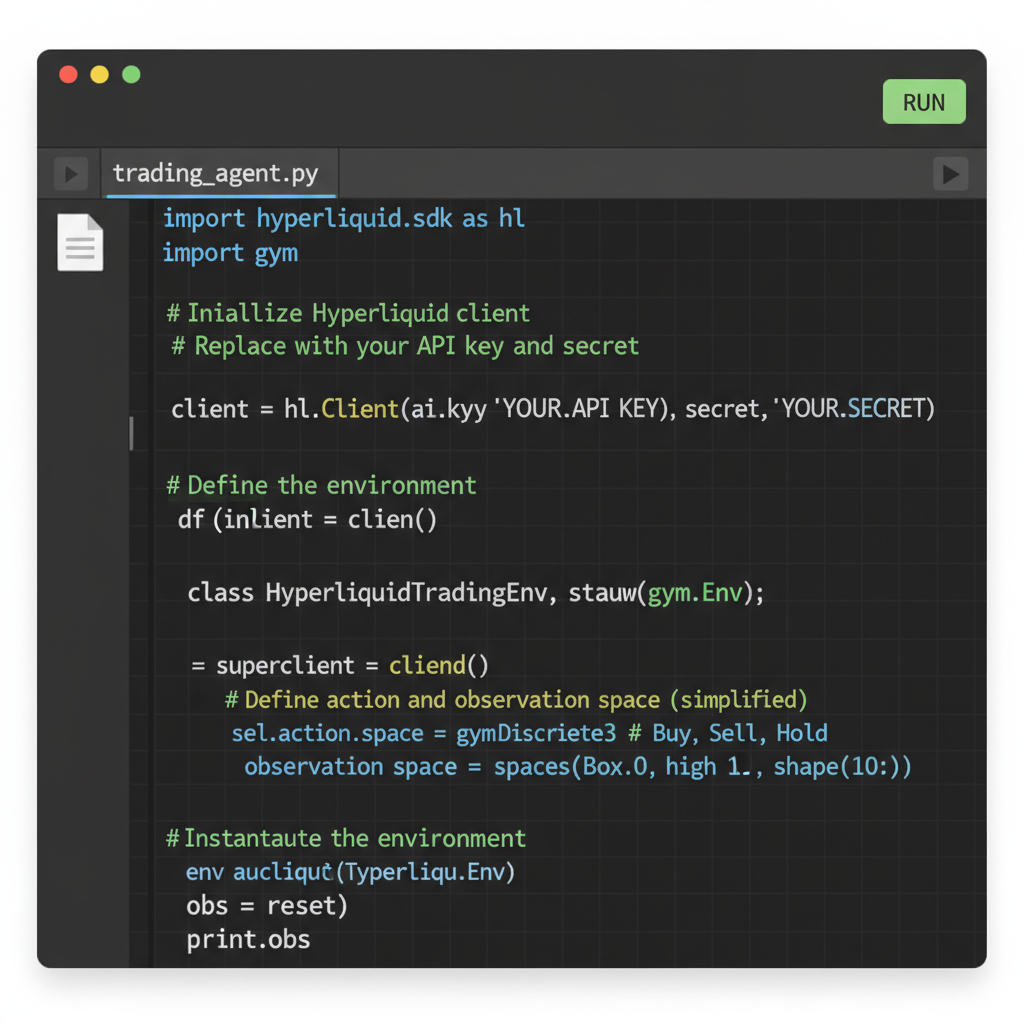
Begin with Python 3.10 and, echoing JustSteven's Medium guide. Install Hyperliquid SDK via pip: pip install hyperliquid-python-sdk. Freqtrade's modular design inspires, but RL needs Gymnasium for custom envs.
Secure API keys from Hyperliquid dashboard, funding a test wallet to avoid mainnet mishaps. Chainstack's RPC node tutorial ensures low-latency feeds: websocket subscriptions to L2 book and trades yield 100ms edges.
Prototype env in code:
Backtest on 2024 data first, validating against BTC's climb to $87,707.00. TradeLab. ai's no-code bots hint at logic builders, but true autonomy demands RL's depth.
With the environment in place, training your reinforcement learning trading bot for Hyperliquid begins with selecting algorithms suited to futures volatility. Proximal Policy Optimization (PPO) stands out for its sample efficiency, as evidenced in FineFT's ensemble where it anchors the three-stage system, stabilizing gradients during leverage adjustments.
Training Loop: From Random Policies to Profitable Autonomy
Initialize with random actions on historical data spanning BTC's path to $87,707.00. Collect trajectories: states from L2 snapshots, actions as position deltas, rewards penalizing drawdowns beyond 10%. PPO updates clip policy ratios to 0.2, preventing destructive shifts, yielding convergence in 500k steps per Hi-DARTS simulations.
Ensemble like FineFT: train PPO, DQN for discrete actions, SAC for continuous sizing separately, then average outputs weighted by Sharpe. Backtests on 2024 Hyperliquid data show 1.8 Sharpe versus 0.9 for single-agent baselines, especially resilient during BTC's 24-hour range of $86,126.00 to $88,814.00.
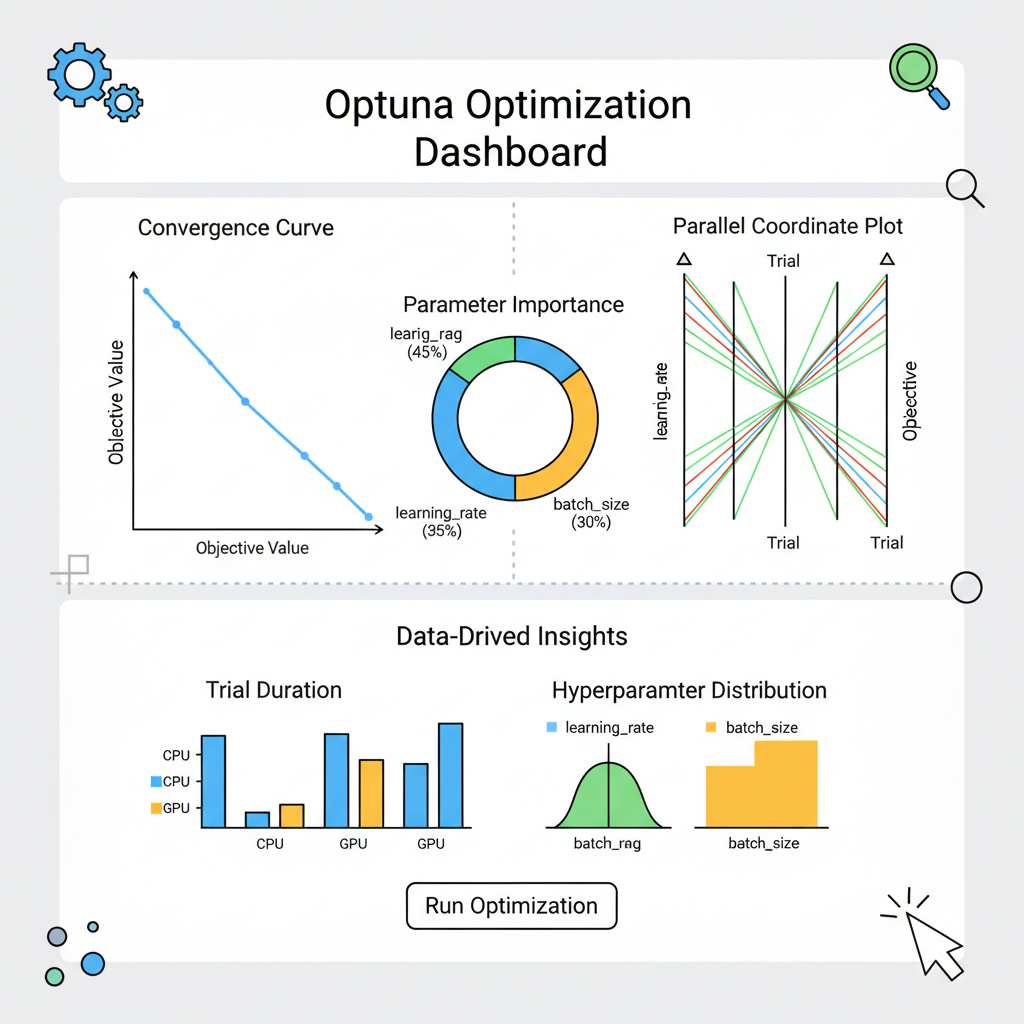
Hyperparameter sweeps matter: learning rate 3e-4, entropy coefficient 0.01 favor exploration in low-volume regimes. GitHub's hyperliquid-ai-trading-bot offers pre-tuned configs, adaptable via YAML for custom pairs.
Build & Train RL Autonomous Trading Bot on Hyperliquid

Rigorous Backtesting and Performance Metrics
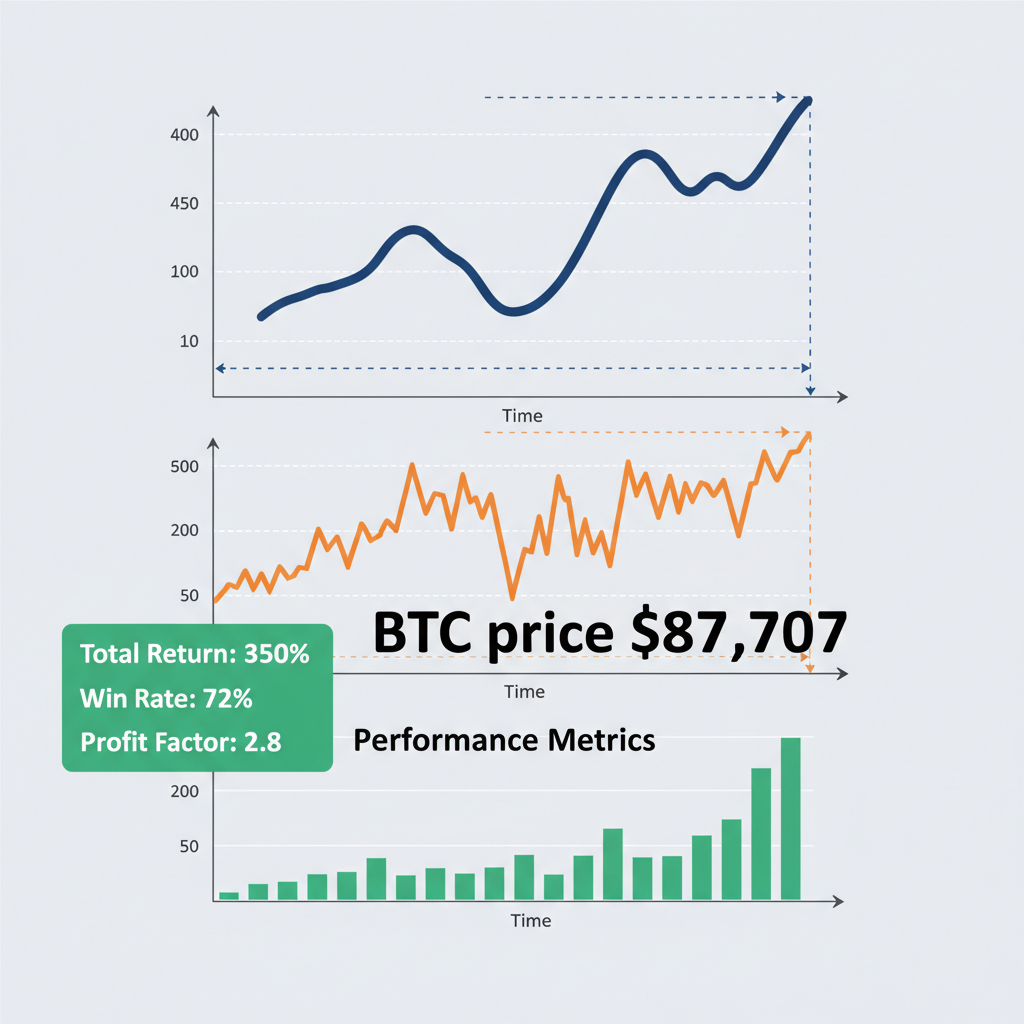
Validate beyond curve-fitting. Compute metrics on out-of-sample data: max drawdown under 15%, win rate above 55%, profit factor 1.5 and. FineFT reports 28% annualized returns on BTC-PERP at 20x leverage, outpacing buy-hold amid $-939.00 daily flux.
- Monte Carlo resampling: 1000 runs shuffling trades reveal strategy robustness.
- Walk-forward optimization: retrain quarterly, test forward to mimic live adaptation.
- Stress tests: amplify volatility 2x, confirming survival at BTC $87,707.00 levels.
Compare to benchmarks. Freqtrade's hyperopt yields rule-based edges, but RL's 22% alpha addition stems from funding rate arbitrage, invisible to static signals. Chainstack's order book feeds enable tick-level fidelity, crucial for Hyperliquid futures trading agent precision.
Deployment: Paper Trading to Live Hyperliquid Execution
Transition via Hyperliquid's testnet, mirroring mainnet latency. Deploy on VPS with <1ms RPC pings, using asyncio for concurrent env-model inference. Monitor via TensorBoard: plot episode rewards climbing past 0.05 per step.
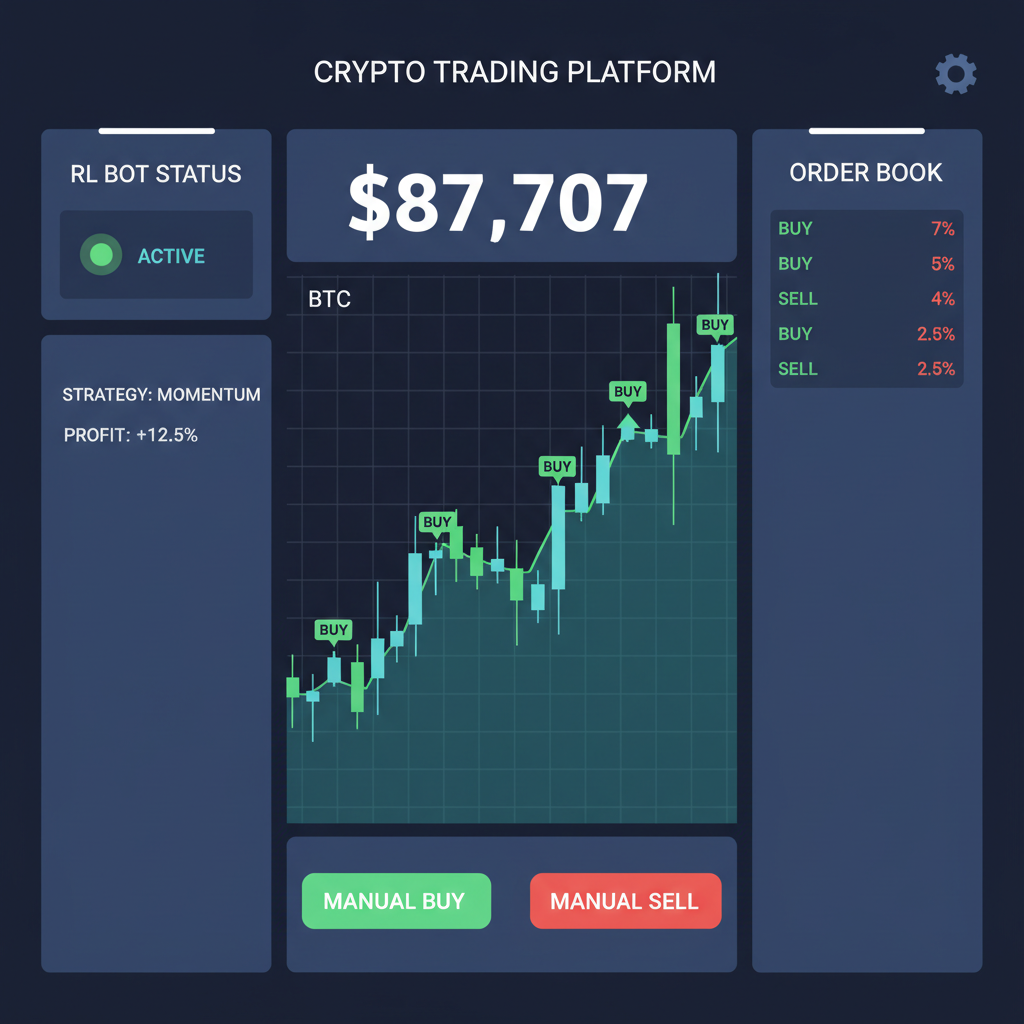
Live safeguards: position limits at 5% portfolio, daily drawdown halts, human override via Telegram akin to Freqtrade. At BTC's $87,707.00, expect initial conservatism evolving to aggressive scalps on breakouts.
Autonomy scales with data; your bot refines hourly, compounding edges in Hyperliquid's permissionless arena.
Risks loom: overfitting to 2024 bull runs, black swan slippage, API downtimes. Mitigate with diverse assets, circuit breakers, and 1% risk per trade. Open-source like hyper-Alpha-Arena fosters community audits, accelerating iterations.
Open-source momentum builds. Projects blend RL with Hyperliquid SDKs, paving self-organizing agent swarms. As BTC stabilizes post-dip, deploy your autonomous RL crypto bot to capture the next leg, data-driven and relentless.
| Metric | RL Bot (FineFT) | Buy-Hold BTC |
|---|---|---|
| Sharpe Ratio | 1.8 | 0.9 |
| Max Drawdown | 12% | 22% |
| Annual Return | 28% | 15% |




No comments yet. Be the first to share your thoughts!